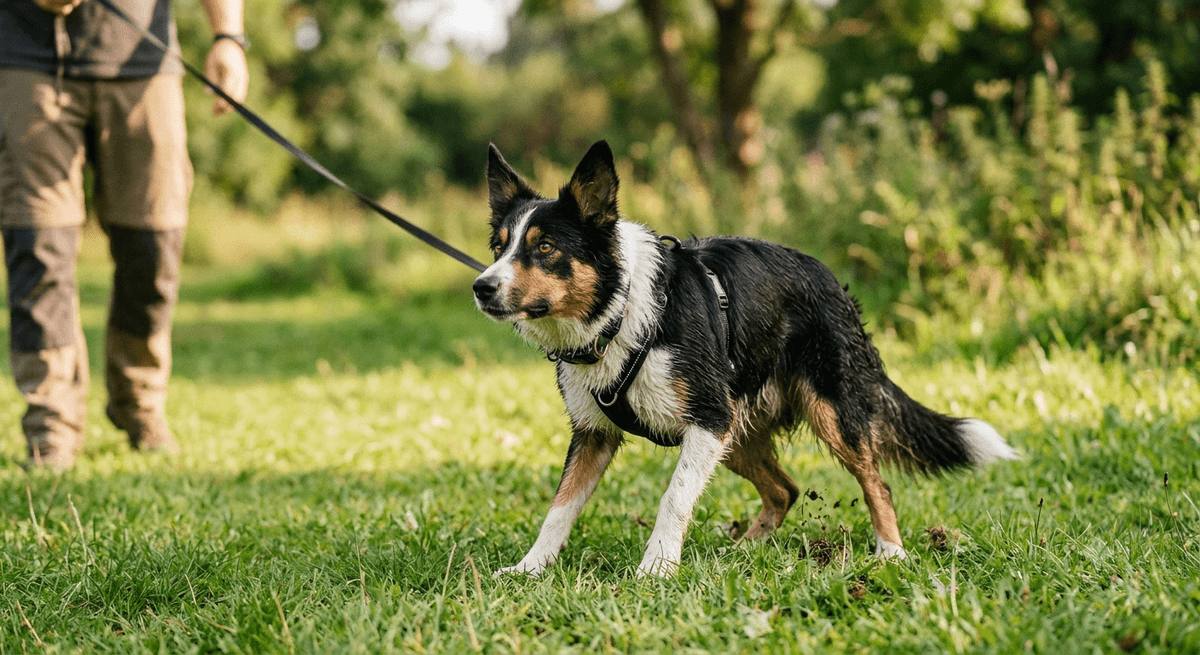
The Smartest Dog Breeds — and the Real Science Behind Why
Most "smartest dog breeds" lists hand you the same seven names and move on. Border Collie, Poodle, German Shepherd — sure, but why? What's actually happening in these dogs that makes them faster learners than the rest?
It turns out researchers have been asking the same question for decades, and the answers are more specific — and more interesting — than "they're just smart." Here's what the actual research says about seven famously sharp breeds, and what "intelligence" even means when it comes to dogs.
Did You Know?
Dog intelligence isn't one thing. Psychologist Stanley Coren, whose research remains the most widely cited framework in the field, divides it into three categories: instinctive intelligence (the tasks a breed was built to do), adaptive intelligence (solving problems on its own), and working/obedience intelligence (how fast it learns from people). Most breed rankings, including the one below, are really measuring the third kind.
7 Genuinely Intelligent Breeds, and the Research Behind Each One
1. Border Collie
Border Collies top nearly every credible ranking of trainability, and it isn't just reputation. Coren's survey of more than 200 obedience judges placed the breed first among over 100 breeds studied, with top-tier dogs able to learn a new command in five repetitions or fewer and obey it correctly on the first try at least 95% of the time.
The clearest evidence of how far that learning capacity can go comes from Chaser, a Border Collie studied for years by psychologist John Pilley at Wofford College. Over roughly three years of daily training, Chaser learned the names of more than 1,000 individual objects — and testing showed she understood them as actual labels for specific things, not just cues to fetch whatever toy was nearby.
The Science Behind the Smarts
Ranked #1 for working and obedience intelligence in Coren's landmark survey of obedience judges.
Chaser's 1,000-plus word vocabulary, published in Behavioural Processes, remains the largest tested vocabulary recorded in a non-human animal.
2. Poodle
The Poodle's show-ring reputation undersells what the breed was actually built for: retrieving waterfowl in Germany, which required reading hand signals and whistle commands at a distance. That history lines up with Coren's ranking, which places the Poodle second overall — and uniquely, researchers have found the trait holds steady across all three sizes.
Toy, Miniature, and Standard Poodles all test in the same top tier for learning speed, which is unusual; most cognitive traits vary more within a breed's size range than this.
The Science Behind the Smarts
Ranked #2 by Coren, just behind the Border Collie, across all three recognized sizes.
Originally selected for responsiveness to hand and whistle signals during retrieval work, a trait that transfers directly into modern trainability.
🐶 Which Kind of Smart Fits Your Life?
Intelligence isn't one-size-fits-all — a dog that thinks fast isn't always a dog that's easy to live with. PetMatch.ai's free 2-minute quiz matches you with real, available dogs based on how you actually want to spend your time, not just a breed's IQ score.
3. German Shepherd
German Shepherds rank third on Coren's list, and their combination of trainability and composure under pressure is exactly why they dominate police, military, and search-and-rescue work worldwide.
Interestingly, a 2023 University of Helsinki study published in Scientific Reports found that German Shepherds actually scored lower on a test of inhibitory control — the ability to resist an impulse — than herding breeds like the Border Collie. The researchers noted this isn't a flaw; it reflects a different kind of intelligence, one built around fast reactivity and independent decision-making under pressure rather than patient restraint, which is precisely what working and protection roles require.
The Science Behind the Smarts
Ranked #3 by Coren for working and obedience intelligence.
University of Helsinki research shows the breed's intelligence leans toward quick, independent decision-making rather than pure obedience — a different cognitive profile, not a lesser one.
4. Golden Retriever
Golden Retrievers rank fourth on Coren's list, but the same 2023 Helsinki study helps explain why they feel so easy to train: when researchers gave dogs an unsolvable puzzle, Golden Retrievers were among the breeds most likely to stop and look to their human for help, rather than trying to muscle through it alone.
That instinct to check in with a person — rather than solve everything independently — is exactly the socio-cognitive trait that makes a dog responsive to training and easy to read, which is also why Golden Retrievers are such a common choice for guide and therapy work.
The Science Behind the Smarts
Ranked #4 by Coren for working and obedience intelligence.
Related Reading
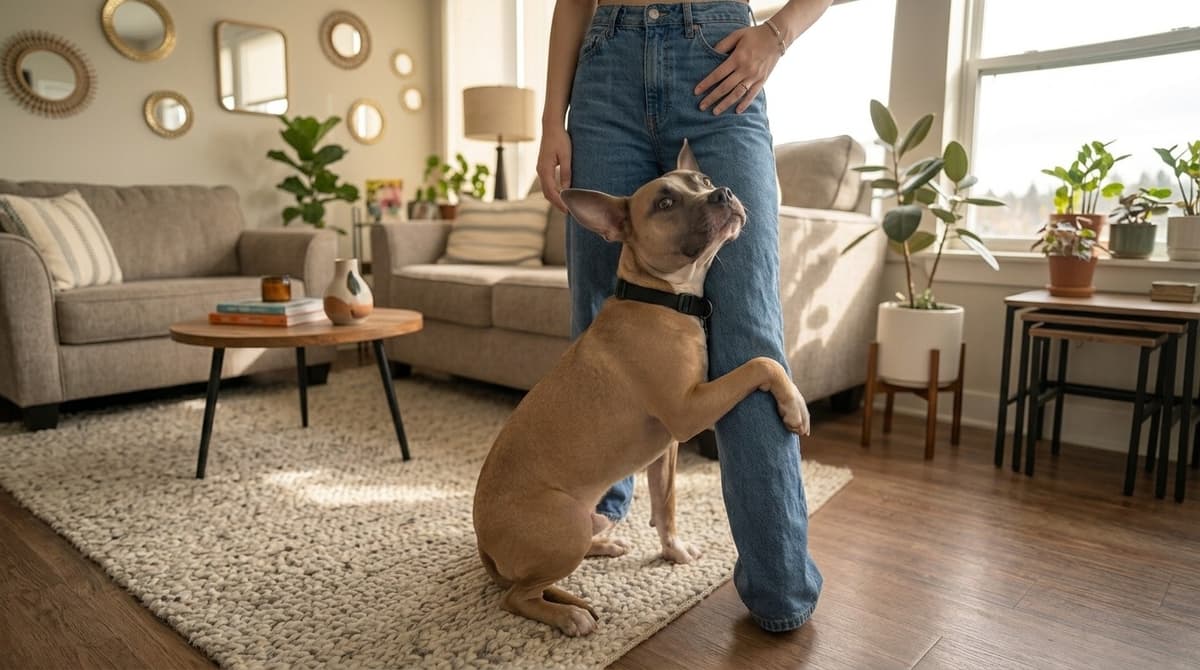


Scored among the highest for "human-directed behavior" in the Helsinki cognition study — turning to a person for guidance rather than problem-solving alone.
5. Doberman Pinscher
The Doberman was purpose-built for intelligence: the breed was developed in the 1890s by Karl Friedrich Louis Dobermann, a German tax collector who wanted a dog sharp and responsive enough to serve as personal protection on his rounds. That original selection pressure — alertness, quick learning, and close attentiveness to a handler — is reflected in Coren's ranking, which places the Doberman fifth overall.
Modern trainers still describe the breed as unusually responsive to correction and quick to generalize a new command to new situations, both hallmarks of the working and obedience intelligence Coren's research measures.
The Science Behind the Smarts
Ranked #5 by Coren, rounding out his top five most trainable breeds.
Selectively bred specifically for alertness and responsiveness to a handler, rather than for an unrelated task like herding or hunting.
6. Australian Cattle Dog
Australian Cattle Dogs (often called blue heelers) were bred to move cattle across the Australian outback with very little human input — which selected for a different kind of smart. Research on working-breed cognition consistently groups independent herding and driving breeds separately from cooperative breeds like retrievers, precisely because they solve problems differently.
The same category of research — including detour and puzzle-box studies comparing independent versus cooperative working breeds — has found that independent breeds are more likely to keep working at a problem on their own rather than checking in with a person, a trait that shows up as "stubbornness" at home but is really self-directed problem-solving doing exactly what it was bred for.
The Science Behind the Smarts
Classified among the "independent working breeds" in cognitive research, alongside other low-input herding and driving dogs.
Tends to persist at solving a problem alone rather than deferring to a person — useful on a ranch, occasionally inconvenient in an apartment.
7. English Springer Spaniel
Springer Spaniels were bred to work in constant, close coordination with a hunter — reading body language, tracking a scent, and retrieving on cue. A large 2019 study in Proceedings of the Royal Society B, which analyzed behavioral data from more than 14,000 dogs across 101 breeds alongside each breed's genetic profile, found that this kind of human-directed sociability is highly heritable and tracks closely with a breed's genetic lineage — not just its training history.
That research helps explain why gundog breeds like the Springer Spaniel are so tuned in to people: the trait isn't incidental, it's been selected for across generations, which is also why the breed struggles with long stretches of alone time.
The Science Behind the Smarts
Bred for constant close coordination with a human hunting partner, reinforcing high responsiveness to cues.
Featured among the breeds studied in a 14,000-dog genetic and behavioral analysis showing human-directed traits are strongly heritable, not just learned.
What "Smart" Actually Means for Your Home
Here's the part most lists skip: a highly intelligent dog isn't automatically an easy dog. Several of the breeds above — Border Collies, German Shepherds, Australian Cattle Dogs — need real, daily mental work, or that same sharp brain turns toward finding its own entertainment, usually at the expense of your furniture.
The research is also clear that intelligence isn't a single scale. A dog that solves problems independently, like an Australian Cattle Dog, and a dog that constantly checks in with you, like a Golden Retriever, are both highly intelligent — they're just intelligent in different, genetically shaped ways. Matching the type of smart to your actual lifestyle matters more than chasing the highest score on a list.
Find a Dog Whose Brain Matches Your Life — Free at PetMatch.ai
Whether you want a dog that thrives on independent problem-solving or one that reads your every move, PetMatch.ai's 2-minute quiz matches you with real, available dogs — from shelters, rescues, and breeders — based on how you actually live, not just a breed's reputation.
Sources
Coren, S. (1994; rev. 2006). The Intelligence of Dogs. Free Press.
Pilley, J. W., & Reid, A. K. (2011). Border collie comprehends object names as verbal referents. Behavioural Processes, 86(2), 184–195.
Junttila, S., et al. (2023). Breed differences in social cognition, inhibitory control, and spatial problem-solving ability. Scientific Reports, 13, 1005. University of Helsinki.
MacLean, E. L., et al. (2019). Highly heritable and functionally relevant breed differences in dog behaviour. Proceedings of the Royal Society B, 286(1912).
Comments (0)
No comments yet. Be the first to share your thoughts!