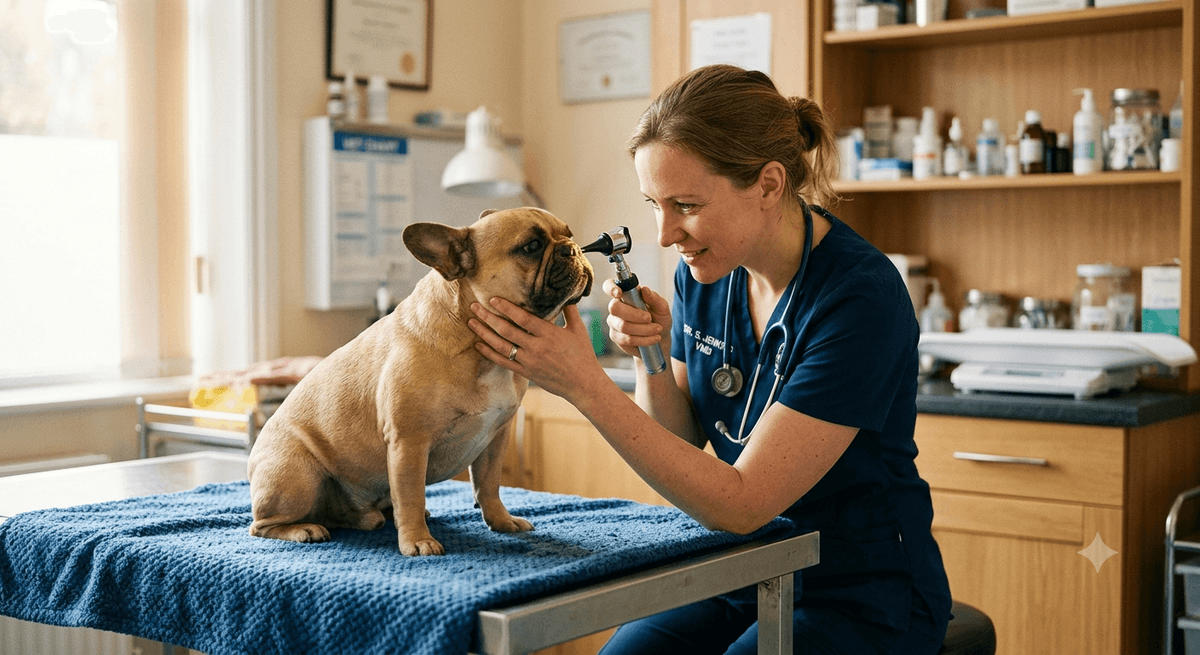
The Flat-Faced Dog Breathing Study Every Owner (and Buyer) Should Read
Flat-faced dogs — Pugs, Bulldogs, Shih Tzus, and a dozen breeds like them — are some of the most popular companions in the country. They're also, as a group, more prone to a breathing condition called Brachycephalic Obstructive Airway Syndrome, or BOAS.
What hasn't been clear until recently is how much this actually varies breed to breed. A new study published February 18, 2026 in PLOS One finally puts real numbers behind the question, testing 898 dogs across 14 brachycephalic breeds. The results are more specific — and more useful for anyone considering one of these breeds — than the usual "flat-faced dogs can have breathing problems" warning.
Did You Know?
BOAS is graded on a 0-to-3 scale by veterinary researchers: grade 0 means a dog shows few or no symptoms, while grade 3 means the dog struggles to exercise and get enough air. The new study found that how a breed scores on this scale varies enormously — some brachycephalic breeds are far healthier than others, even though they all share the same general "flat-faced" look.
What the Research Actually Found
Researchers led by Francesca Tomlinson at the University of Cambridge measured skulls, noses, bodies, and necks across 898 volunteer dogs from 14 breeds, then screened each dog for BOAS symptoms. They compared their results to existing data on Pugs, French Bulldogs, and Bulldogs — the three breeds most heavily studied until now.
Three factors were consistently linked to BOAS risk across the whole study: a higher body condition score (meaning a heavier dog), narrowed or collapsing nostrils, and a lower craniofacial ratio — essentially, how short the muzzle is relative to the skull. Together, these three factors explained about 20% of the variation in which dogs developed symptoms, meaning breed and individual anatomy both matter.
Breed Share of Dogs Breathing Freely (BOAS Grade 0) Pekingese 11% breathing freely — similar to Bulldogs (highest risk) Japanese Chin 17.4% breathing freely King Charles Spaniel, Shih Tzu, Boston Terrier 25–50% breathing freely Cavalier King Charles Spaniel, Pomeranian, Boxer, Chihuahua 50–75% breathing freely (lower risk)
The Surprising Exception
Not every result matched expectations. The King Charles Spaniel — which has an extremely flat face by measurement — had a lower BOAS rate than its skull shape alone would predict. The researchers noted this directly, which suggests conformation isn't the whole story; individual breeding lines and other anatomical factors also play a role.
Why Flat Faces Cause Breathing Problems in the First Place
The mechanism traces back to a 2015 study by Rowena Packer and colleagues, which first showed that BOAS risk rises sharply once a dog's muzzle is less than half the length of its skull — a measurement called the craniofacial ratio. That same 2015 research also identified neck girth as a secondary risk factor, the same anatomical trait linked to sleep apnea risk in humans, along with obesity as a compounding factor.
In practice, this means the skull structure that gives these breeds their distinctive look — a shortened muzzle with the same amount of soft tissue crowded into less space — leaves less room for a dog to move air freely, especially when it's overheated, excited, or overweight.
🐶 Choosing a Breed Shouldn't Mean Guessing About Health
PetMatch.ai's free 2-minute quiz matches you with real, available dogs — factoring in health considerations like this alongside your lifestyle, energy level, and living situation — so you're not choosing blind.
What This Means If You Already Have — or Want — a Flat-Faced Dog
None of this means brachycephalic breeds should be avoided outright — it means going in with clear eyes. If you already share your home with one of the higher-risk breeds above, watch for the recognizable signs: loud snoring that continues while awake, tiring quickly on short walks, or gagging and retching after eating or drinking.
If your dog is showing these symptoms, corrective surgery is a real, well-established option — typically widening the nostrils, shortening the soft palate, or both. Costs vary by procedure and region, but industry pricing generally runs from around $500 for a single nostril-widening procedure up to $3,500 or more for a fuller correction, and most dogs recover within two to four weeks.
If you're choosing a breed for the first time, the study's practical takeaway is this: within any brachycephalic breed, ask a breeder or shelter about the specific dog's breathing at rest and after mild exercise, not just its breed name — since even within one breed, individual dogs vary widely.
Sources
Tomlinson, F., Liu, N-C., Sargan, D.R., & Ladlow, J.F. (2026). A cross-sectional study into the prevalence and conformational risk factors of BOAS across fourteen brachycephalic dog breeds. PLOS One, 21(2), e0340604.
Packer, R.M.A., et al. (2015). Impact of facial conformation on canine health: Brachycephalic obstructive airway syndrome. PLOS One, 10(10), e0137496.
Vety (2026). How Much Does BOAS Surgery Cost? Industry pricing survey.
Insurify (2025). Does Pet Insurance Cover BOAS Surgery? Cost and coverage overview.
Match With a Dog That Fits Your Life — Health Considerations Included
PetMatch.ai's quiz factors in real health and lifestyle considerations — not just looks — to match you with a dog you can build a long, healthy life with. Takes 2 minutes.
Comments (0)
No comments yet. Be the first to share your thoughts!