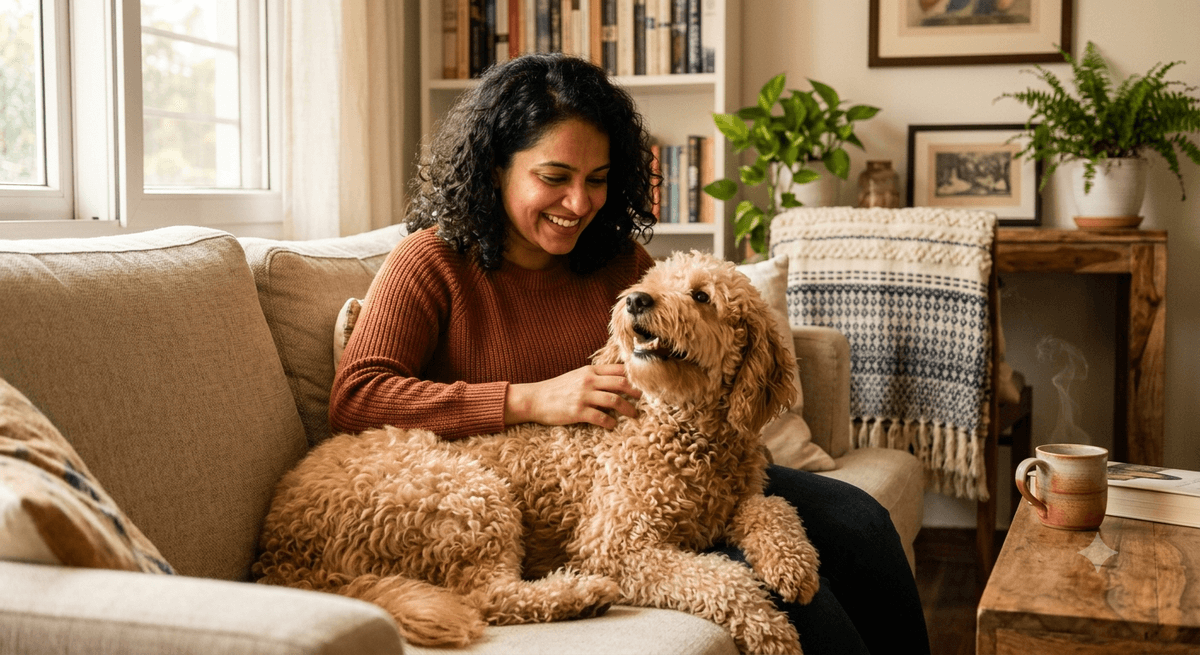
Are Hypoallergenic Dogs Actually a Myth? What Doodle Owners Wish They Knew
You paid $3,000 for a dog that still triggers your allergies. Here is why that happened — and why it is not your fault, and not entirely the breeder's fault either.
The word hypoallergenic gets attached to dog breeds constantly — Poodles, Doodles of every variety, Bichons, Portuguese Water Dogs. It is on breeder websites, in shelter listings, in casual conversation among dog owners. It is also, according to veterinary allergists, not scientifically accurate in the absolute sense the word implies.
No dog breed is completely hypoallergenic. That is not an opinion. It is the consistent finding across multiple controlled studies measuring allergen levels in homes with different dog breeds, including a frequently cited 2011 study that found no significant difference in allergen levels between homes with so-called hypoallergenic breeds and homes with other dogs.
This does not mean the word is meaningless or that allergy-conscious dog ownership is impossible. It means the reality is more nuanced — and more useful to understand — than a marketing label suggests.
0
breeds proven completely hypoallergenic in studies
10-20%
of the US population has some pet allergy
$3,500+
average price paid for a "hypoallergenic" puppy
60%
rise in Google searches for dog allergy relief
Section 1: What Actually Causes Dog Allergies
To understand why no dog is fully hypoallergenic, it helps to understand what people are actually reacting to.
Most dog allergies are not primarily a reaction to fur or shedding, despite the common assumption. The main allergen is a protein called Can f 1, found in a dog's saliva, skin (dander), and to a lesser extent, urine. Every dog produces this protein, regardless of coat type, shedding level, or breed.
Dander — tiny flakes of dead skin — is the primary delivery method for this allergen into your home environment. It becomes airborne, settles on furniture and carpets, and triggers allergic reactions in sensitive individuals. A dog that sheds less hair does not necessarily produce less dander or less of the actual allergenic protein.
This is the core misunderstanding behind the hypoallergenic label. Low-shedding breeds — Poodles, Doodles, Bichons, Portuguese Water Dogs — were given the hypoallergenic reputation because less visible hair seemed to suggest less allergen exposure. But hair itself is not the primary problem. The protein on the skin and in the saliva is.
The 2011 Study That Changed the Conversation:
Research published in the American Journal of Rhinology and Allergy measured allergen levels in homes with dogs from breeds commonly labeled hypoallergenic versus homes with other breeds. The study found no statistically significant difference in airborne or settled allergen levels between the two groups. This finding has been supported by subsequent veterinary allergy research, leading most veterinary dermatologists and allergists to describe "hypoallergenic dog" as a misleading marketing term rather than a scientifically precise category.
Section 2: Why Some Dogs Genuinely Cause Fewer Reactions — Even If Not Hypoallergenic
None of this means breed choice is irrelevant for allergy-sensitive households. It means the mechanism is more specific than most people realize, and understanding it leads to better decisions than chasing the hypoallergenic label alone.
A few real factors do meaningfully affect allergen exposure:
Lower shedding can reduce the spread of dander throughout a home, even if it does not eliminate the underlying protein — less hair falling means less dander hitching a ride on it across your floors and furniture
Individual dogs, even within the same breed, can produce different amounts of allergenic protein — there is real variation at the individual level that breed alone cannot predict
Coat type affects how much dander gets trapped versus released — curly, dense coats common in Poodles and Doodles can trap dander closer to the skin rather than releasing it freely into the air, though regular grooming is required to prevent buildup
Smaller dogs produce proportionally less total allergen simply due to less skin surface area and saliva volume
This means a low-shedding breed, paired with rigorous grooming, can genuinely reduce allergen load in a home — just not to zero, and not reliably enough to guarantee comfort for every allergy-sensitive person.
The Honest Reframe:
Instead of asking "which breed is hypoallergenic," the more useful question is "which breed and individual dog will produce the lowest allergen load for my specific sensitivity, combined with the management practices I am willing to commit to." This is a spectrum, not a binary — and it requires testing your actual reaction to a specific dog whenever possible, not just trusting a breed label.
Related Reading
Best Dogs for First-Time Owners: 6 Breeds That Work
The Real Reason Some Dogs Never Leave Your Side
Am I Ready for a Dog? A Brutally Honest Self-Assessment
Section 3: The Real Cost of Chasing the Hypoallergenic Label
The hypoallergenic reputation has become one of the most powerful price drivers in the dog market. Breeds and mixes marketed this way — particularly Doodles of every variety — consistently command premium prices well above comparable non-marketed breeds, often with limited additional health or temperament benefit to justify the gap.
Category Doodle / Poodle Mix Standard Purebred Average purchase price $2,000-$5,000+ $800-$2,500 Health testing consistency Highly variable — many Doodle breeders skip formal health testing More standardized within breed clubs and registries Genetic predictability Low — first-generation crosses especially unpredictable in coat, size, temperament High — generations of selective breeding Grooming cost (annual) $700-$1,500 for curly/low-shed coats requiring frequent professional grooming $0-$600 depending on coat type Allergy guarantee None — individual variation, no breed-based guarantee exists Same — no breed-based guarantee exists
Related Reading


This is not a condemnation of Doodles or low-shedding breeds — many are wonderful, well-suited family dogs. It is a clear-eyed look at what the premium price actually buys: lower likelihood of severe shedding and somewhat reduced dander spread, not a guarantee of allergy-free living, and often less health testing rigor than buyers assume they are paying for.
A Critical Distinction for Doodle Buyers:
Because "Doodle" breeding is largely unregulated by formal breed clubs, quality varies enormously between breeders. Some Doodle breeders conduct the same rigorous health testing as purebred breeders. Many do not, prioritizing coat type and color over genetic health screening. If allergy management and health predictability both matter to you, vet the specific breeder's health testing practices directly — the word "Doodle" alone tells you very little about either factor.
Section 4: Breeds Commonly Marketed as Hypoallergenic — The Honest Picture
Here is a breed-by-breed look at the most commonly marketed low-allergen options, with both the allergy reality and the cost reality laid out honestly.
Poodle (Standard, Miniature, Toy)
Allergy Reality: Genuinely lower shedding with a dense, curly coat that traps dander closer to the skin. Among the more consistently reported lower-reaction breeds, though individual variation still applies. Requires regular professional grooming to maintain this benefit.
Cost Note: Purebred Poodles from health-tested lines typically range $1,500-$3,000, often with more rigorous health testing available through breed clubs than unregulated Doodle crosses.
Goldendoodle / Labradoodle
Allergy Reality: Allergy outcomes vary enormously depending on which parent's coat genetics dominate — a first-generation cross can range from Poodle-like curl to Golden or Lab-like shedding. Multi-generation crosses (F2, F3) bred specifically for coat consistency are more reliable but harder to verify without genetic testing.
Cost Note: Among the most expensive dogs in the current market, frequently $2,500-$5,000+, with health testing rigor varying dramatically by individual breeder. Always request parent health clearances directly.
Portuguese Water Dog
Allergy Reality: Low-shedding, dense curly coat similar to Poodle genetics. Reasonably consistent allergy-reduction reputation among owners, supported by formal breed club health testing standards.
Cost Note: Less commonly bred than Doodles, typically $2,000-$3,500 from health-tested lines, with more standardized genetic testing available than less-regulated Doodle crosses.
Bichon Frise
Allergy Reality: Low-shedding curly coat with a long-established, genuine reputation for reduced allergen spread among sensitive owners, though as with all breeds, individual reaction varies.
Cost Note: Generally more affordable than Doodle crosses, typically $1,000-$2,500, with established breed club health testing standards.
The Recommendation That Actually Matters:
If allergies are a serious concern, spend time with the specific individual dog you are considering — ideally multiple visits, in an enclosed space, over at least a few hours — before committing financially. Breed reputation is a starting point, not a guarantee. Individual dogs within any breed can produce meaningfully different allergen levels, and your own reaction is the only test that actually matters.
Section 5: Practical Allergy Management Beyond Breed Choice
Regardless of which breed you choose, several management practices meaningfully reduce allergen exposure in the home — often more effectively than breed selection alone.
Regular bathing — weekly or biweekly bathing measurably reduces allergen levels on a dog's coat and skin, regardless of breed
HEPA air purifiers — particularly in bedrooms, these capture airborne dander effectively and are one of the most consistently recommended interventions by allergists
Designated dog-free zones — keeping the dog out of the primary bedroom reduces overnight exposure significantly
Frequent vacuuming with a HEPA-filter vacuum — standard vacuums can recirculate allergens rather than capturing them
Washing bedding weekly in hot water — including the dog's bedding
Allergy testing before adoption — some allergists offer breed-specific dander testing to help identify which breeds your immune system reacts to most strongly
The Bottom Line
No dog is completely hypoallergenic. That is settled science, not opinion. But that does not mean allergy-conscious dog ownership is impossible — it means success depends on understanding the real mechanism behind allergic reactions, choosing wisely among genuinely lower-shedding breeds, testing your reaction to specific individual dogs whenever possible, and committing to consistent management practices regardless of which breed you choose.
If you are paying a premium for the hypoallergenic label, know exactly what that premium buys — and what it does not guarantee. A well-bred, health-tested Poodle or Portuguese Water Dog may offer real allergy benefits at a more reasonable price than an unregulated Doodle cross marketed primarily on the strength of that label alone.
PetMatch.ai factors in allergy sensitivity as part of your compatibility profile, helping you find dogs whose coat type, individual history, and breed background align with what your specific situation actually needs — informed by science, not marketing.
Find Your Allergy-Conscious Match — Free at PetMatch.ai
Tell us about your allergy sensitivity and we will show you dogs whose coat type and breed background are genuinely suited to your needs — with honest information about what to expect, not marketing promises.
Comments (0)
No comments yet. Be the first to share your thoughts!